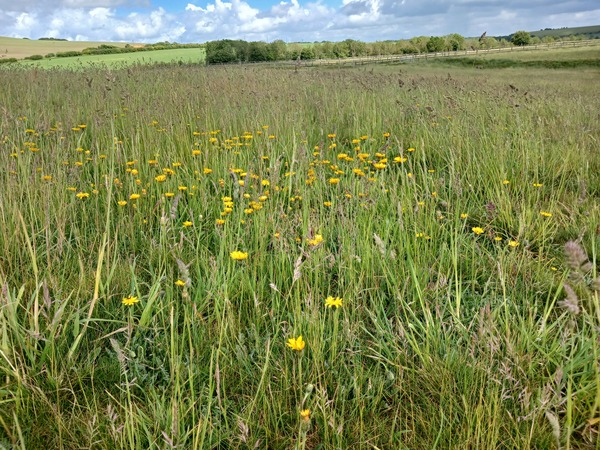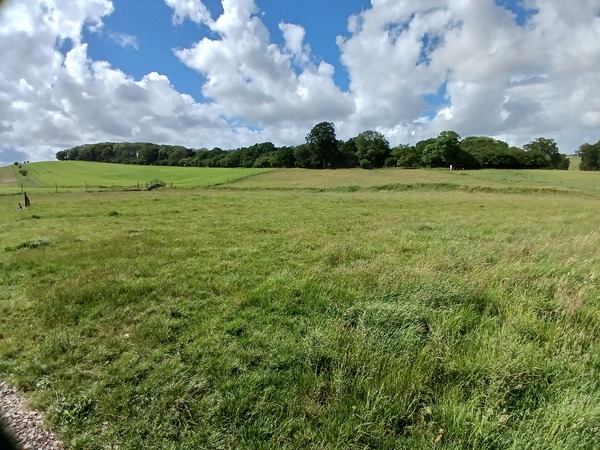
One of the quiet pleasures of Ashdown Paddock is discovering the remarkable diversity of plants that are naturally thriving across the site. We have never applied weedkillers or fertilisers here, allowing the paddock to evolve naturally and reveal the character of the land itself.
Rather than trying to impose a formal landscape upon the paddock, we are allowing nature to guide the process. The result has been an increasingly rich mixture of grasses, wildflowers and native species, many of which are associated with traditional low input meadowland.
Charlock (Wild Mustard)
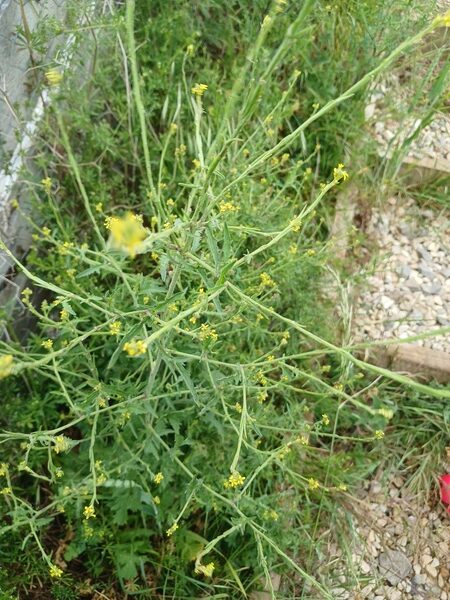
Charlock is a cheerful yellow flowering plant from the brassica family, commonly found in traditional farmland and disturbed ground. Its small four petalled flowers attract pollinating insects throughout the summer. Although often regarded as a simple agricultural weed, it forms part of the natural tapestry of old grassland and uncultivated corners. It dopes spread rapidly so we do keep it under control by pulling up a few of the plants.
Cock’s Foot Grass
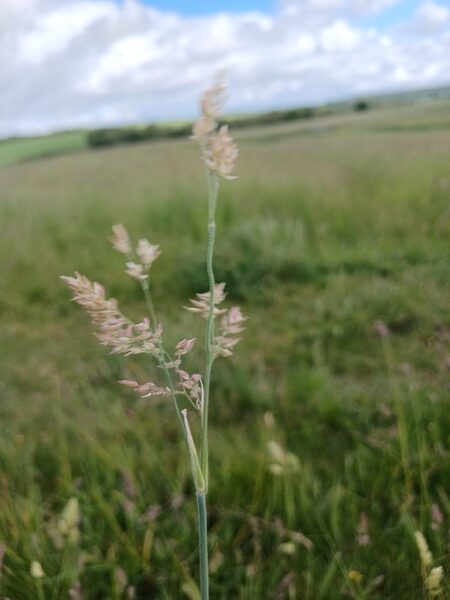
Cock’s foot is one of Britain’s most widespread native meadow grasses. It forms dense tufted clumps with distinctive branching seed heads. Livestock graze it readily, and it provides valuable shelter for insects and small wildlife. In traditional hay meadows it contributes texture and structure amongst the wildflowers.
Yellow Rattle
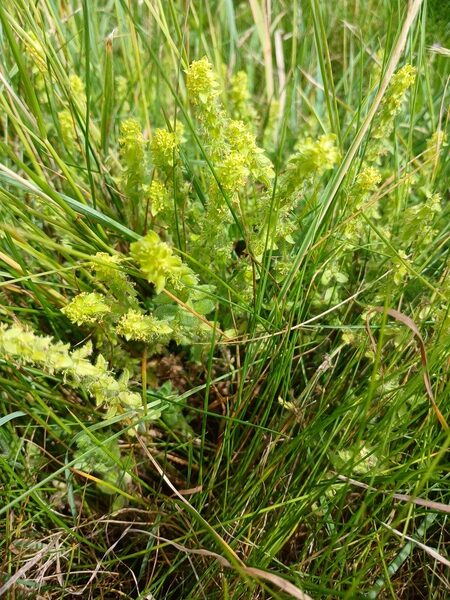
Yellow rattle is one of the most important wildflowers in a species rich meadow. This fascinating plant is semi parasitic on grasses, weakening vigorous species and creating space for flowers to flourish. Its yellow blooms appear in early summer, and the dry seed pods later produce the characteristic “rattling” sound that gives the plant its name.
Red Clover
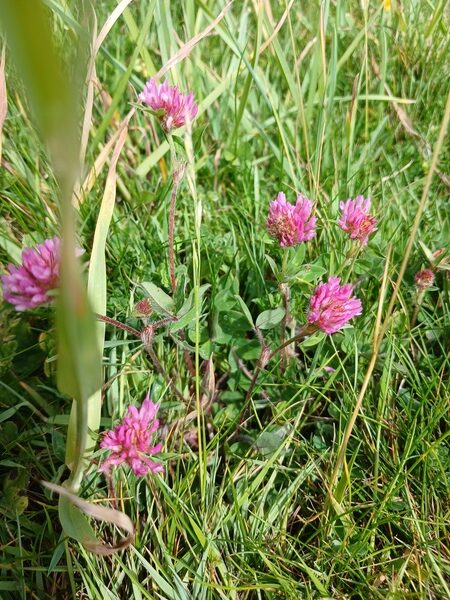
Red clover is a beautiful pink purple wildflower beloved by bees and other pollinators. As a member of the pea family it naturally fixes nitrogen into the soil, helping enrich the meadow without artificial fertilisers. It has long been associated with traditional pasture and healthy, low input grassland.
Cat’s Ear (False Dandelion)
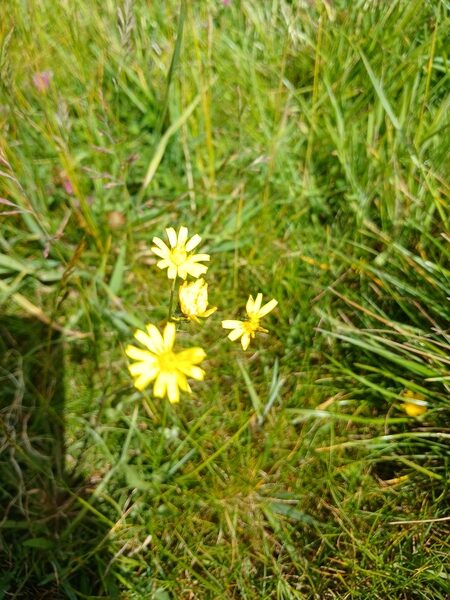
Cat’s ear is often mistaken for a dandelion, though it has several flowers branching from a single stem. The bright yellow blooms open in sunshine and provide nectar for insects. It thrives in unimproved grassland and is a familiar sight in traditional meadows throughout the British countryside.
Black Medick
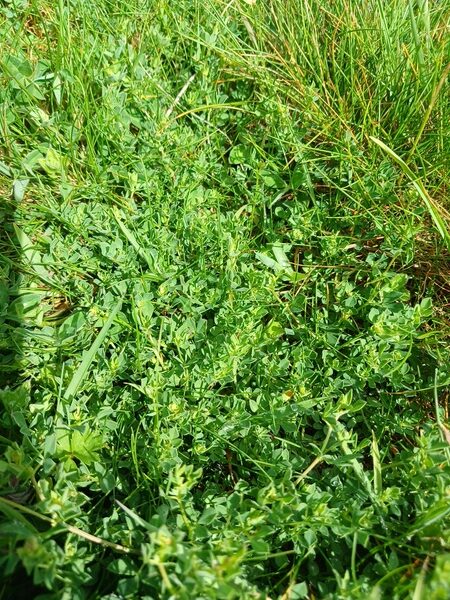
Black medick is a low growing member of the clover family with tiny yellow flowers and delicate leaves. Like clover, it improves the soil naturally by fixing nitrogen. It spreads gently through grassland and supports insects whilst helping maintain a balanced and diverse meadow ecosystem.
Crested Dog’s Tail Grass
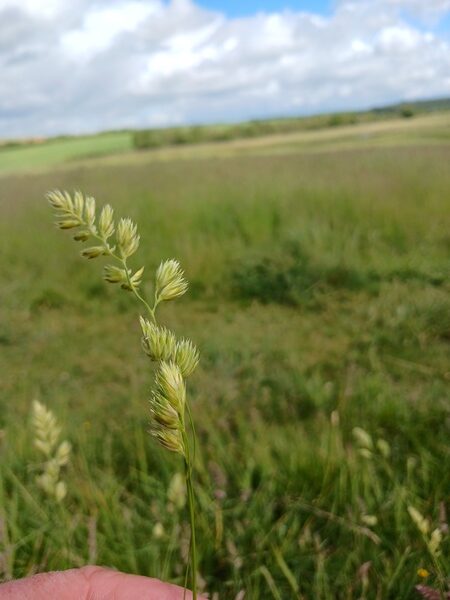
Crested dog’s tail is a classic meadow grass strongly associated with traditional hay meadows and old pasture. Its flattened comb like seed heads are distinctive and elegant. Because it grows well on low fertility soils, it is often considered a positive indicator of unimproved grassland.
Bracken
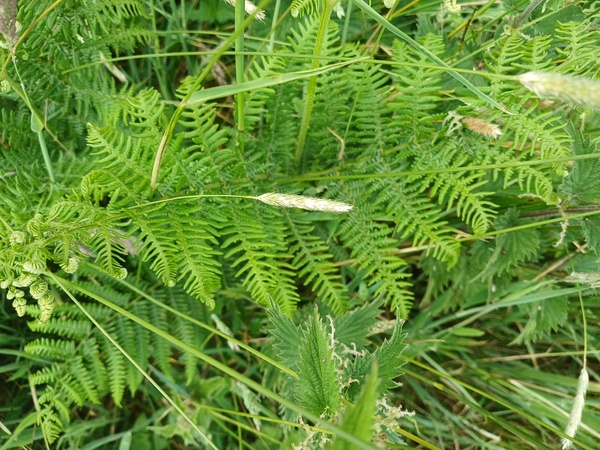
Bracken is one of Britain’s most recognisable native ferns, unfurling each spring from tightly curled young fronds. It thrives on poorer soils and field margins and has shaped the appearance of the British landscape for centuries. While vigorous, it creates important shelter for insects, birds and small mammals.
Sedge
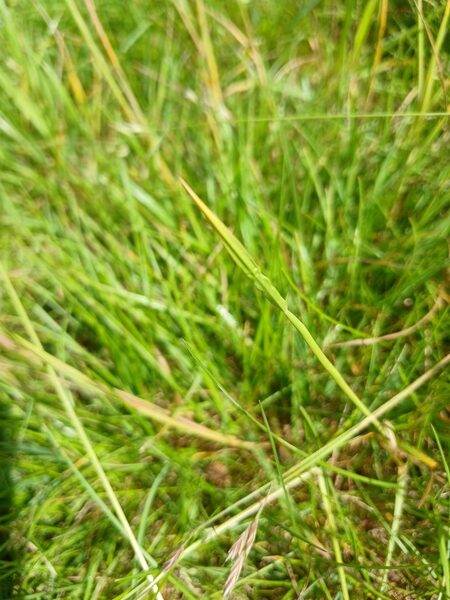
Sedges resemble grasses but belong to a different plant family and are often found in ecologically rich grassland. Their stems are usually triangular rather than round. Sedges are particularly associated with traditional meadows and damp pasture, where they provide structure, cover and habitat diversity.
Meadow Buttercup
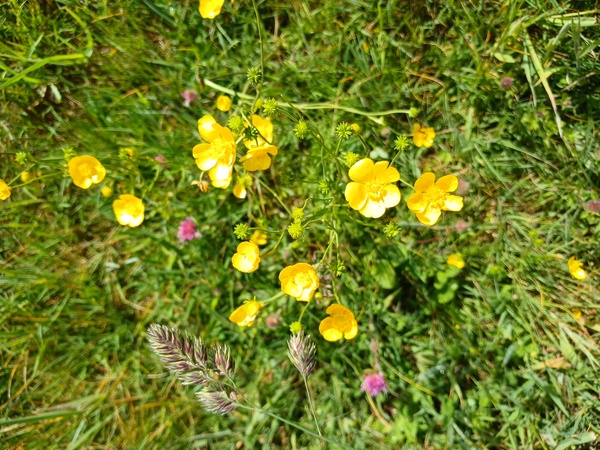
Meadow buttercups bring bright golden colour to grassland during late spring and early summer. Their glossy petals seem almost to shine in sunlight. These native flowers are characteristic of traditional hay meadows and old pasture, adding vibrancy and supporting pollinating insects throughout the flowering season.
Common Hogweed
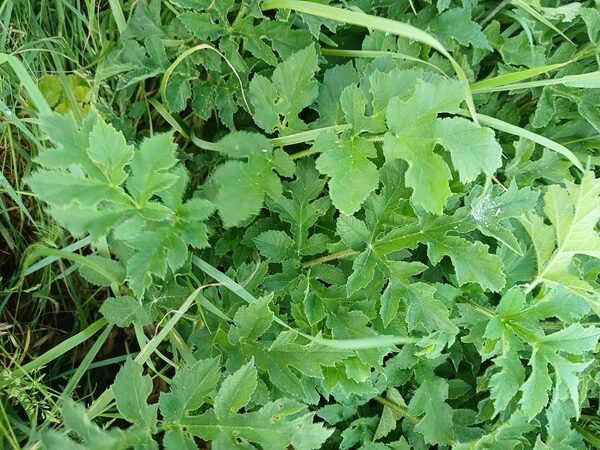
Despite its rather dramatic name, common hogweed is a valuable native wildflower found in hedgerows and meadow edges. Later in summer it produces large white umbrella shaped flower heads that are highly attractive to pollinating insects. It has long been part of the British rural landscape.
Red Fescue
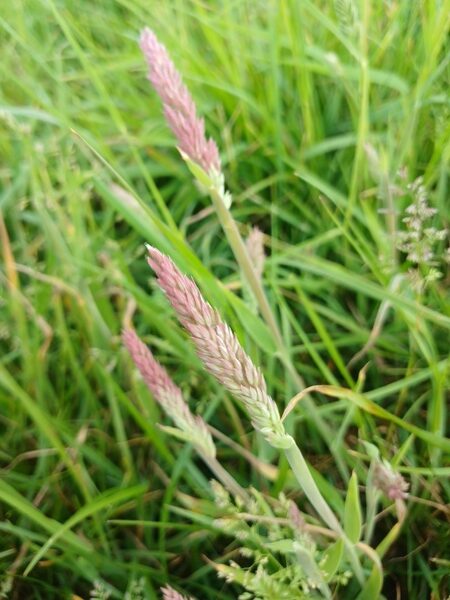
Red fescue is a fine leaved native grass that thrives on poorer soils where fertiliser has not been heavily used. Its delicate pink tinged seed heads add subtle beauty to the meadow. It is widely regarded as one of the key grasses of species rich traditional pasture.
Crane’s Bill Geranium
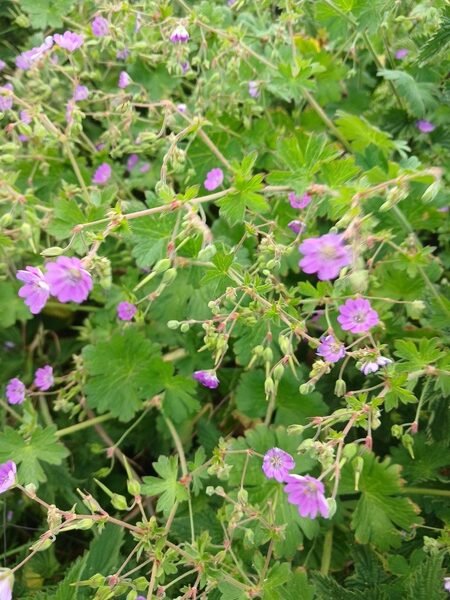
Crane’s bill is a graceful wild geranium with delicate purple pink flowers and deeply lobed leaves. The plant gets its name from the long beak shaped seed pods that develop after flowering. It provides nectar for bees and brings colour and softness to meadow margins and hedgerows.
Common Knapweed
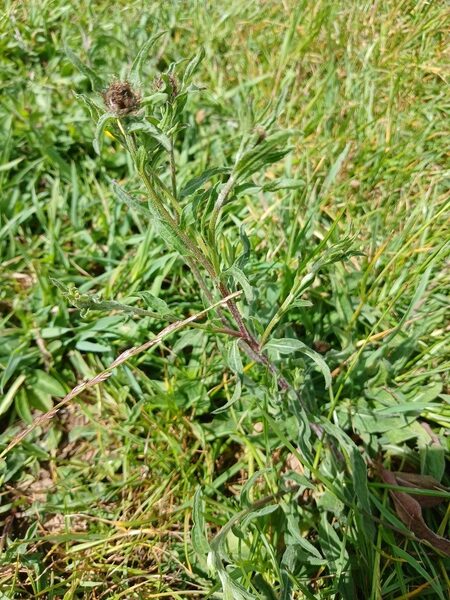
Common knapweed is one of the great pollinator plants of late summer, producing vivid purple thistle like flowers rich in nectar. Butterflies and bees are especially attracted to it. Even after flowering, the distinctive seed heads remain attractive and add texture to the meadow landscape.
Pineappleweed
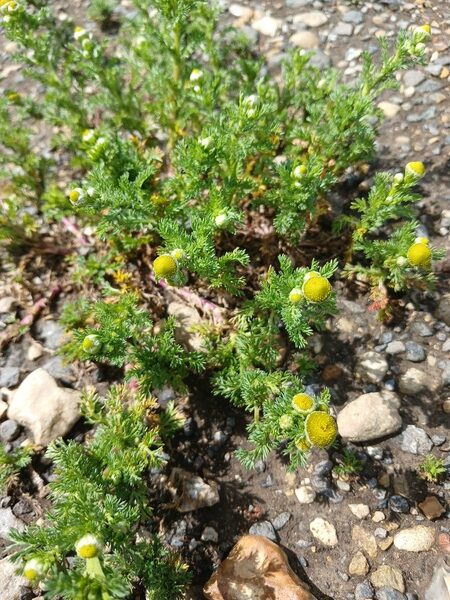
Pineappleweed is a small, easily overlooked plant commonly found along paths and compacted ground. Its tiny yellow green flower heads release a surprisingly sweet pineapple scent when crushed. Closely related to chamomile, it is a charming reminder that even the smallest plants can hold unexpected character.
A Living Meadow
Together, these plants tell the story of a paddock that has been allowed to develop naturally without chemicals or intensive management. The diversity emerging across Ashdown Paddock is encouraging evidence that nature responds remarkably quickly when given space, patience and freedom to flourish.
We should add that we are enthusiastic observers rather than horticultural experts, and whilst we have done our very best to identify the species growing at Ashdown Paddock, there may well be occasions where we have misidentified a plant. If you notice anything incorrect, please do let us know.
Equally, if you spot any additional flora or fauna on the site, we would be delighted to hear from you. One of the pleasures of Ashdown Paddock is discovering the extraordinary diversity of life that is quietly establishing itself here, and we would be most grateful for any additions to the growing list of species recorded across the paddock.